Report: Key solutions to expand participation in clinical trials
New report addresses hidden costs and logistical barriers preventing clinical trial participation
February 2026
A new report from the PAN Foundation* finds that the current, largely transactional, approach to clinical trial engagement is not working. The report, Optimizing Clinical Trial Participation: Addressing Social and Financial Factors, highlights solutions-based recommendations to address the social and financial barriers patients face when it comes to participating in clinical trials, in hopes of increasing participation nationwide.
Our findings were developed from a 2025 roundtable hosted by the PAN Foundation featuring leaders from the pharmaceutical industry, clinical research organizations, patient advocacy groups, and community-based organizations.
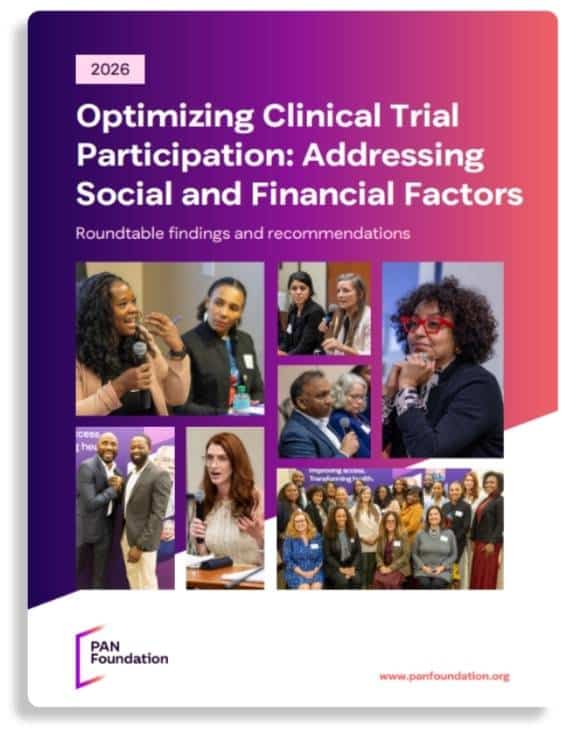

The report synthesizes roundtable discussions into five key recommendations for research teams, trial sponsors, and sites:
- Include patient voices early in trial design: Seek input from patients and community organizations to identify barriers before trials begin.
- Provide more than basic reimbursement: Support transportation, childcare, and administrative needs, and offer clear guidance on insurance and other costs.
- Design trials with real-life challenges in mind: consider work schedules, household responsibilities, and local resources when planning trial protocols.
- Educate providers and communities: Give healthcare teams and local organizations the tools and guidance they need to explain trials clearly and accurately.
- Invest in long-term partnerships: Work with local organizations and community groups to provide ongoing support and build trust for future trials.
“Many patients face social and financial barriers to participation, and too often, people are never invited to participate at all,” said Kim Baich, Chief Impact Officer at the PAN Foundation. “Addressing these challenges will require collaboration across the clinical trial industry.”
Emerging themes
In addition to the key recommendations, roundtable participants identified some emerging themes that are critical for making clinical trials more accessible and inclusive. There was a strong consensus that considerations regarding non-medical drivers of health must be embedded from the start, rather than waiting until later in trial design when addressing inclusion becomes ineffective and costly. Roundtable participants also highlighted the urgent need to move away from more technical and inaccessible language to clearer, more patient-centered language and to deliver education well before trial participation is required.
Finally, financial and infrastructure gaps are major barriers that make it difficult for patients to participate in trials, and the entire healthcare ecosystem—including clinicians, care teams, and community organizations—has a role to play in explaining trials and supporting patient participation.

What’s next
According to the roundtable participants, what is required for actual change is a sustained, systems-level operating model—one that aligns sponsors, sites, patient organizations, and communities around a shared, long-term vision for access, efficiency, and trust.
The PAN Foundation is committed to turning these insights into action. That’s why over the coming months, we’re working with roundtable participants to create a practical, industry-facing playbook based on these recommendations. The playbook will provide concrete tools and strategies that sponsors, research sites, and community partners can use to expand access, improve enrollment, and support patients throughout the clinical trial process.
*PAN Foundation and Patient Advocate Foundation announced a strategic merger in March 2026, operating as Patient Advocate Foundation. Learn more at Uniting.PatientAdvocate.org.